An autistic shutdown is mistakenly used to describe autistic meltdowns, but the two are different from each other. Read on to learn how.
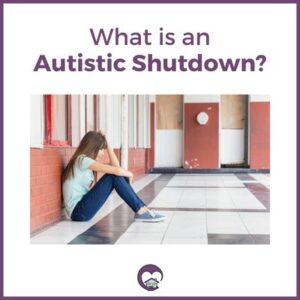
Autistic Shutdowns: What & why they happen
An autistic shutdown happens when the autistic person is so overloaded that they essentially cannot manage life. Unlike during an autistic meltdown, the autistic person will (you guessed it) shut down.
There are no verbal outbursts, but they may react physically by going limp or shoving you away.
Autistic shutdown symptoms include:
- Lying on the floor stimming
- Quiet, crying or whimpering
- Yawning in social situations
- Spending more time alone
- Irritable or on edge
- Idle behaviors (staring into space, withdrawing to a quiet and possibly even dark place, not speaking, seemingly blank, etc.)
Every autistic person is different, so your child could possibly have shut down with other symptoms.
Autistic meltdowns vs shutdowns vs autistic burnout
An autistic person’s energy is like your phone battery. Some apps use more energy than others, as does having a bunch of apps open at one time.
When your battery dies, the phone shuts off.
- Autistic burnout is when the phone dies. Whatever you want from the autistic person, you’re not getting it.
- Autistic meltdowns are the notifications about your phone running out of space and unable to cope with additional stimuli. The autistic person may behave uncharacteristically.
- Autistic shutdowns are battery-saving mode. The autistic person is still functioning somewhat, but they need time to reset and rest so they can cope with life again. There is little to no energy to meltdown, no matter how angry they are.
I consider shutdowns worse than meltdowns. If I shut down as a result of someone disrespecting my boundaries, they are officially an unsafe person for me, and I will spend less time with them.
Shutting down is also a general sign of feeling unsafe. It’s not an attempt to control or punish someone else. Pay attention if an autistic person shuts down around certain people or during specific situations.
This is also known as fawning/freezing, which is a trigger response; it’s a high-stress situation.
What triggers an autistic shutdown?
If meltdowns are triggered by anything and everything (and especially pent-up emotions) what triggers an autistic shutdown?
Here are some triggers:
1. Too many demands/expectations
The more expectations autistic people have to meet, on top of everything else we deal with, is simply too much.
A common request by autistic employees is written instructions and one task at a time, not a full-on itinerary of everything they need to do.
There is not enough functioning capacity to do all the things.
2. Sensory overload
Too much sensory overwhelm can lead to an autistic shutdown. This is the most common trigger for meltdowns and shutdowns.
3. Communication struggles
Invalidated feelings and emotions teach children to bottle those feelings up inside.
Children often attempt to communicate their needs in ways that work for them developmentally, but caregivers tend to ignore these instances.
I only know how to articulate this through a personal example:
My aunt told me I’m not allowed to get upset or be mad at anything she told me. (I temporarily lost my independence and had to live with her, though I ultimately left when it turned unsafe.)
She told me, “My house, I do whatever I want.” This is a toxic statement of entitlement, as emotionally mature individuals do not say things like this.
She went on to say, “I don’t care if you get ‘stressed’ or don’t like it. You can’t get upset with me. I can say whatever I want, and you have to listen because I’m your AUNT.”
I showed zero emotion, stifled my feelings. My face was flat. I’m autistic and relaxed while she was away from the house for work or errands, but I instantly shut down when she returned home.
Anything she said, I barely reacted to. She didn’t see my smile. I didn’t reply when she said she loves me, because I realized how conditional it is.
I cried in the shower and quietly to sleep, because I wasn’t allowed to feel anything. I stopped laughing when she was home because she’d burst into the room to remind me of my faults.
A shutdown can be lying on the floor or withdrawing from a relationship. It’s not always unique to autism, but the autistic traits associated are what turns the shutdown into an autism shutdown.
Autistic shutdowns are serious because they last as long as the cause. They are unseen to those who don’t understand them. Increased stress leads to serious consequences. In my experience, the chest ache right before a meltdown prolongs the entirety of the shutdown.
Stages of autistic shutdowns
The stages of an autistic shutdown is similar to those of autistic meltdowns:
1. Signs of distress
Increased stimming or occurrences of meltdowns can lead to a shutdown.
An autistic person might first experience a meltdown, then experience a shutdown. This is not the same as the recovery period.
Perhaps they yell or scream beforehand. Was there an argument and lots of frustration, but no relief? Were things breaking or they couldn’t get something right?
2. Shutdown
Unlike in autistic meltdowns, autistic shutdowns do not include explosions. They shutdown, like a phone when the battery dies.
3. Recovery
After shutting down, an autistic person might try to pretend they never did. If they are typically speaking, hours might pass before they speak again.
Unmasking after a long shutdown feels too risky. It is such a vulnerable thing to be oneself around people, if an autistic even knows who they are.
Go with the flow instead of pushing them to explain themselves. You will only push them back into a shutdown.
If they never stop their shutdown around you, it’s likely a mask. If they’ve started masking around you, it means you’re not a safe person from their perspective.
Once a person is deemed unsafe by a trauma victim, it is nearly impossible to become a safe person again.
How to prevent autistic shutdowns
You can’t. Teach boundaries. Giving to the autistic people in your life will help them develop skills needed to assess and prevent what causes them to shutdown.
Many autistic children are never allowed to say “no”. “No” is viewed as defiance and something for the parent to correct. Autistic children are conditioned to say “yes” joyfully, even outside of ABA, to be more manageable for the adults around them.
Not being able to say no, having your boundaries repeatedly crossed, and being unable to express yourself safely all increase stress, the risk of heart complications and psychosis. Even a non-autistic person, in a healthy state of mind, can snap from this.
Autistic children and people are often treated like objects or robots, dehumanized and expected to behave like humans. This is the reason so many autistic people kill themselves.
Please help them to not be a statistic. Please listen to actually autistic people.
Have you or your child experienced an autistic shutdown? Share about it in the comments below.
Click here for a free PDF printable checklist of the 7 steps to take when your child needs residential treatment.





Leave a Reply